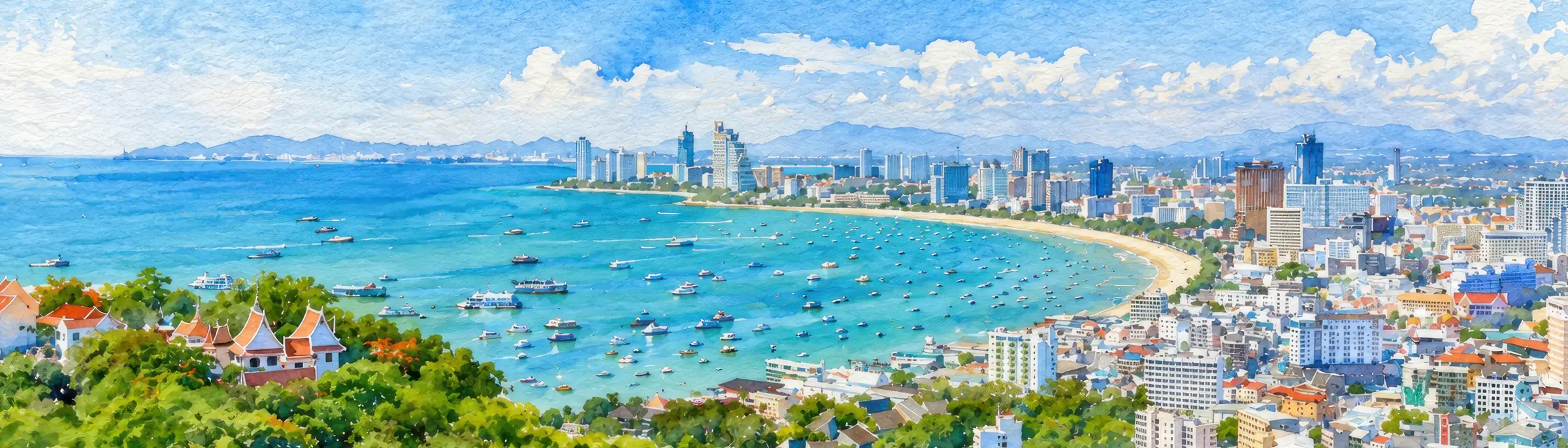
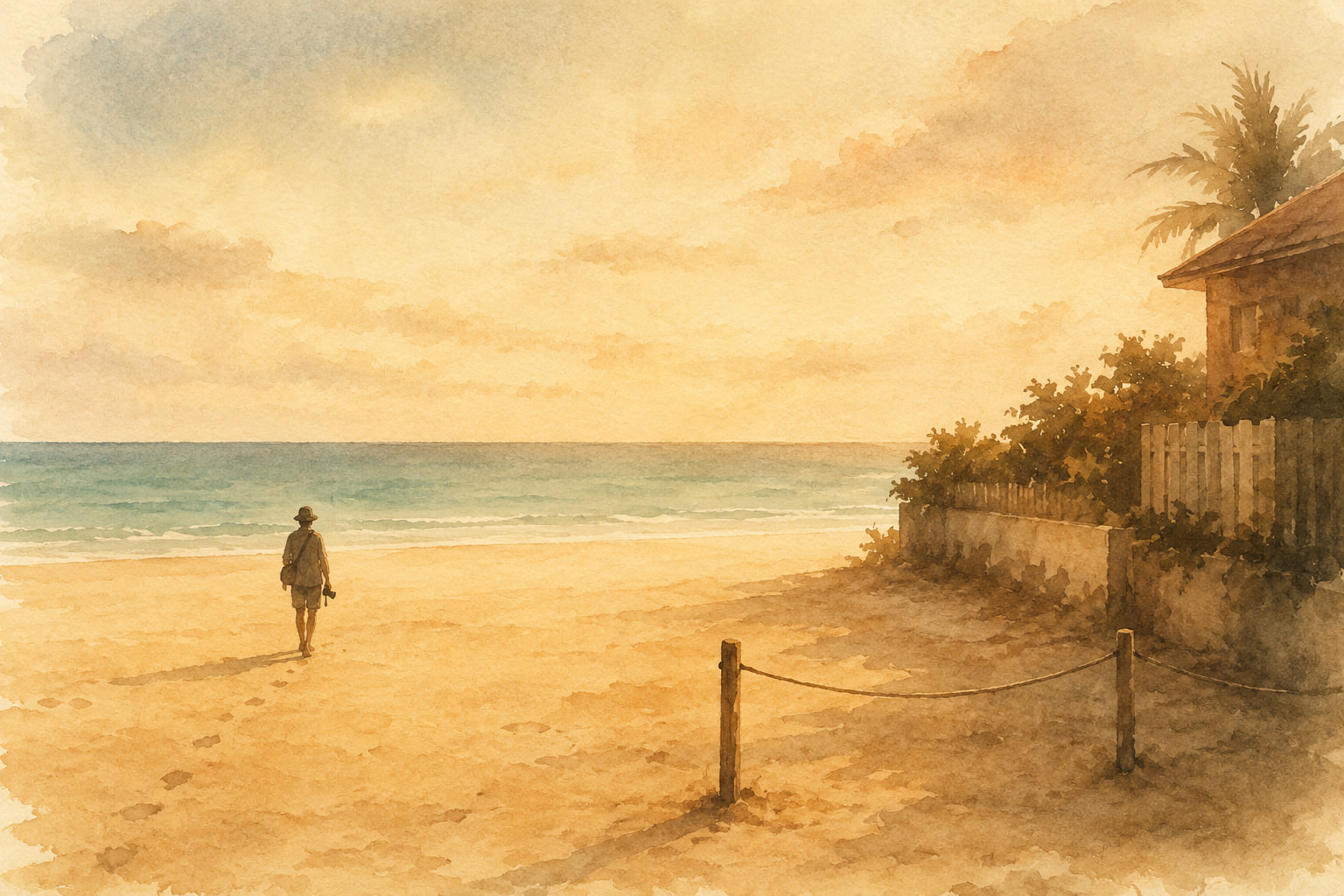
The question comes up the day before the shoot, when everything is already booked: is it even legal to head to the beach with a photographer, step into a temple, raise a camera on the street? In Pattaya people are shooting on every corner, and it can seem as if there are no rules at all. There are rules; it’s just that nearly all of them apply to commercial production, drones, and a handful of sensitive subjects, not to a tourist with a photographer. For an ordinary vacation shoot, the line runs nowhere near where people fear it does.
There’s a second layer to keep in mind: who enforces the rules depends on where you are. In some places it’s the law and the city authorities, in others it’s temple etiquette and the abbot, and on the street at night it’s a bar’s security guard. So whether something is “allowed or not” depends not only on the letter of the law but also on who is standing in front of you.
Let’s go place by place: where you can shoot freely, where you need to arrange it first, and what separates a personal photo shoot from something that really does require a permit.
Beach, promenade, street: you can shoot
The public beaches (Jomtien, Wong Amat, the central beach), the promenade, and the city streets are open space. You don’t need a separate permit for a personal shoot here, and professionals work at these locations every day. Pattaya has no “photography fee” and no municipal ban on shooting.
One fact puts half of these fears to rest: in Thailand the beach is public land that cannot be privatized, and no one can close off access to the beach itself (legally it is “public property of the state”). Even if a hotel treats the strip in front of it as its own, sets out loungers, or wants money for shooting there, it has no right to stop you from shooting on the beach, whether or not you are its guest.
What a hotel does control is the way through its grounds (if it won’t let you through, get onto the beach from the public end) and its own loungers and structures. The law doesn’t forbid photographing its buildings from a public place, but under its own rules a hotel may ask you to keep them out of the picture, and sometimes a staff member hovers at a distance for that purpose. That is the hotel’s policy, not authority over you on the sand. There’s no need to be alarmed: a shot toward the sea is almost always better than one toward the hotel.
One caveat, even for open space: a camera pointed straight at a police station, a checkpoint, or port infrastructure is read differently from one pointed at the sea or the promenade. It’s better not to shoot that kind of thing in detail (more on this below).
Where the line is drawn: personal vs. commercial
The key distinction in the Thai rules is not “amateur vs. professional” but personal use vs. commercial use. A picture taken as a keepsake, for the family album or your own social media, is personal use and needs no permit, even if a paid professional takes it.
Commercial work (advertising, content for sale, video for streaming, a big staged production) is a different category. Video production needs a permit obtained through the Thailand Film Office (you apply in advance, roughly a business week ahead); large-scale photography for commercial purposes calls for notifying the relevant authority. Specific signs push you toward “approval needed”: a commercial purpose for the images, a crew with lights and equipment, blocking a walkway, a drone, and the venue’s own rules.
A practical rule of thumb: a couple, a family, or a solo traveler with one photographer on the beach is a personal shoot, and there’s nothing to file. A group with light stands, reflectors, and a model for an advertisement is permit territory.
Attractions with their own rules
Open space is one thing; an enclosed site is another. Each venue sets its own conditions, and they don’t depend on the citywide rules.
Sanctuary of Truth. This is the case where the general rule “personal means free” doesn’t apply: the venue goes by its own conditions. Visitors are let in only with a guide, along a fixed route, and in a hard hat. Shooting with a dedicated photographer and visible equipment counts as professional here, even if the photographer shoots on a phone and even if it’s only for yourself, and is prohibited without permission obtained in advance through a separate application (for staged and pre-wedding shoots the venue is rented out by individual arrangement). Tickets cost around 500 baht in the daytime and about 700 for sunset. The details are in our look at the Sanctuary of Truth as a shoot location.
Nong Nooch Tropical Garden. You can shoot freely anywhere on the garden grounds; admission is around 500–600 baht, and the place is popular for pre-wedding shoots. Two exceptions: the mahouts charge separately for photos with the elephants (and make the elephant pose and do tricks), and the owners’ car collection, though openly displayed, may not be photographed.
Big Buddha (Wat Phra Yai) on Pratamnak Hill and the city temples. Entry is free and photography is allowed, but you must keep to a strict dress code (shoulders and knees covered) and shoot respectfully.
Hotel pool. A guest is usually allowed to shoot for personal use after letting the hotel know, provided it doesn’t disturb other guests. The same goes for cafés and other private “Instagrammable” spots. If you aren’t staying at the hotel, you’ll need a separate arrangement with the management, often for a fee.
One rule applies to every venue: no single price list for “professional” or wedding shoots is posted publicly anywhere, so it always comes down to contacting the venue directly, in advance.
Temples and ceremonies: where etiquette, not law, sets the rules
Thailand has no separate law on photography in temples; it all comes down to the individual temple’s policy and Buddhist etiquette. In most places personal photos are allowed, but halls that hold sacred objects often have an outright ban, which the signs make clear. At the Wat Yan complex, for instance, photography is forbidden in two places: inside the main white chedi, which is ringed with sculpted lotus buds (its full name is Phra Borommathat Chedi Maha Chakri Phiphat), and in the Phra Mondop chapel. Both are especially revered: the chedi holds relics of the Buddha, and the chapel a replica of his footprints.
Shooting a ceremony is a separate matter. A wedding ceremony or a religious ritual has to be arranged with the abbot in advance; turning up with a camera unannounced won’t work here. A donation is customary: to the temple, through its shop (roughly 200 baht and up), and to the monks who conduct the ceremony (usually 5–9 of them, from 20 baht each: that is the smallest banknote, coins are not given, and anything more is up to you). The donation is part of the ceremony itself, and it is wrong to see it as the price of the shoot.
There’s also an unspoken part that you won’t find in any rulebook. More doors open to those who know these rules and respect them: a photographer the temple knows, one who also attends ceremonies there, may be let in where an outsider is not, right up onto the dais with the monks, and allowed to shoot from beside the Buddha statue itself. What opens those doors is reputation and being part of the place; an expensive camera by itself carries no weight here.
Can a foreign photographer work legally?
This is the part people rarely say out loud, and for a directory, honesty about it is a matter of principle. A foreigner can work legally as a photographer in Thailand: that takes a work permit with the appropriate entry in it and a suitable visa. What is illegal is something else: shooting for pay on a tourist visa, or with no work permit at all, which can end in deportation and a ban on re-entry.
The distinction matters: a friend or relative who photographed you for free was not “working.” This is about paid work without proper authorization.
For a client this is above all a sign of reliability. A photographer who is set up legally is more likely to still be around, to deliver your photos, and to be reachable next season. That is why in the directory we show the public traces a professional leaves (a real name, a website of their own, years on a specialist platform) and not only a good-looking portfolio.
Drones: a separate case, and a strict one
In Thailand a drone is the most heavily regulated part of a shoot. It has to be registered twice: with the NBTC (the owner and the radio frequency) and with the CAAT (the drone itself as an aircraft, and its pilot) — even if you never once take off. Since 2025 the CAAT has required you to take an online test on the rules and get a passing score, and the drone must carry liability insurance of around a million baht.
You may fly only in daylight and within line of sight, and for every flight a flight plan has to be filed in advance (at least 3 days ahead) through the CAAT portal. Flights within a radius of about 9 km of an airport are banned, which is critical for Pattaya with U-Tapao close by. The distances are strict: no closer than 30 meters to people, vehicles, and buildings (for light drones; 50 for heavy ones) and no higher than 90 meters; over crowds, built-up urban areas, and military, restricted, and religious sites, flying is banned outright. The penalties are serious: a fine and up to a year in prison for breaking the flight rules, and up to 100,000 baht and up to 5 years in prison for a drone that isn’t registered with the NBTC; in August 2025 a photographer was detained for flying a drone over Walking Street.
In practice these limits come down to something simple: you won’t get anything truly beautiful from a drone in Pattaya, except perhaps a very wide view of the city or a district. And the law is only part of it: a drone almost always has a wide-angle lens, so even from the minimum permitted 30 meters a person takes up about 5% of the height of the frame. For a portrait that is nothing — a drone is for the wide shot, not for people. On top of that, temporary flight bans are imposed over Pattaya from time to time for safety reasons, so it pays to check the status right before the shoot. If aerial shots really matter to you, discuss them with the photographer in advance, including their registration and how well they know the zones, rather than settling for “let’s bring a drone just in case.”
What you cannot photograph
A few subjects in Thailand are a matter of real risk, not of politeness.
The King and the royal family. The lèse-majesté law (Section 112) carries 3 to 15 years per offense; in recent years people have received extremely harsh sentences for distributing material judged disrespectful. This is criminal law, not a formality.
Military and restricted sites. Bases, checkpoints, anything with a “no photography” sign: these you don’t photograph. More broadly, even in an ordinary public place it’s better not to take detailed shots of police, port, or transport infrastructure, since they may be seen as a security threat. A chance street shot raises no questions; the trouble starts where a restricted site is photographed deliberately and in detail.
A photo that humiliates someone. No “photo law” forbids it directly, but it falls under the laws on defamation and insult, which in Thailand are strict and work in an unfamiliar way. It is the person who took the picture who has to prove that it is truthful and justified by the public interest; the burden of proof lies with the photographer. A mocking or compromising picture of a stranger is not protected here by any “freedom of the street.”
People in the frame. Thailand has had a personal data law since 2022, but it isn’t about the chance passerby. A passerby may end up in a shot without consent if the shoot is in a public space and they are not its main subject. Consent is needed when a particular person becomes the subject of the shoot, or when the photo is put to commercial use.
Walking Street and the bars: no ban, but conflict all the same
There’s no formal ban on photographing the venues on Walking Street. But the bars don’t like pictures of their dancers, entrances, and signs: extra attention to how they operate is something they’d rather do without. You can shoot the general atmosphere of the street, but pointing your lens straight at a particular entrance or at the girls is asking for a talk with security or with tipsy patrons. Here the rule is enforced by the bouncer at the door, not by the police or the law, and arguing with him will cost you more than it’s worth.
What this means for your shoot
If you’re planning an ordinary vacation shoot (couple, family, or solo) on the beach, on the street, or at the hotel where you’re staying, you don’t need to file anything. Pattaya gives you a lot of freedom to shoot for personal use.
Permits and approvals start where one of the following comes in: someone else’s enclosed property, a particular attraction with its own rules, a temple ceremony, a commercial purpose for the images, a drone, or a sensitive subject. For each of these there is someone to ask: the venue, the abbot, or the photographer.
It helps to remember the reverse, too: there are more rules on paper than are enforced in practice. Real intervention comes where children, a person’s dignity, or commercial gain without the paperwork are involved, so that is what to watch first. And for commercial work the math is simple: one scandal on social media costs more in reputation than any fee, so it’s cheaper to file than to clean up afterward.
One last thing: ask the photographer whether they work legally and whether they have an arrangement with the location, if you’re shooting at an enclosed site, in a temple, or at a hotel where you aren’t a guest. A good photographer answers this calmly and specifically. An evasive answer is information in itself.