Real estate is the most transparent genre in photography. A photo either shows the apartment as it really looks or it misleads. A buyer or renter comes to the showing, sees the difference, and the deal either falls through or leaves them dissatisfied. Either way, the photo has not done its job.
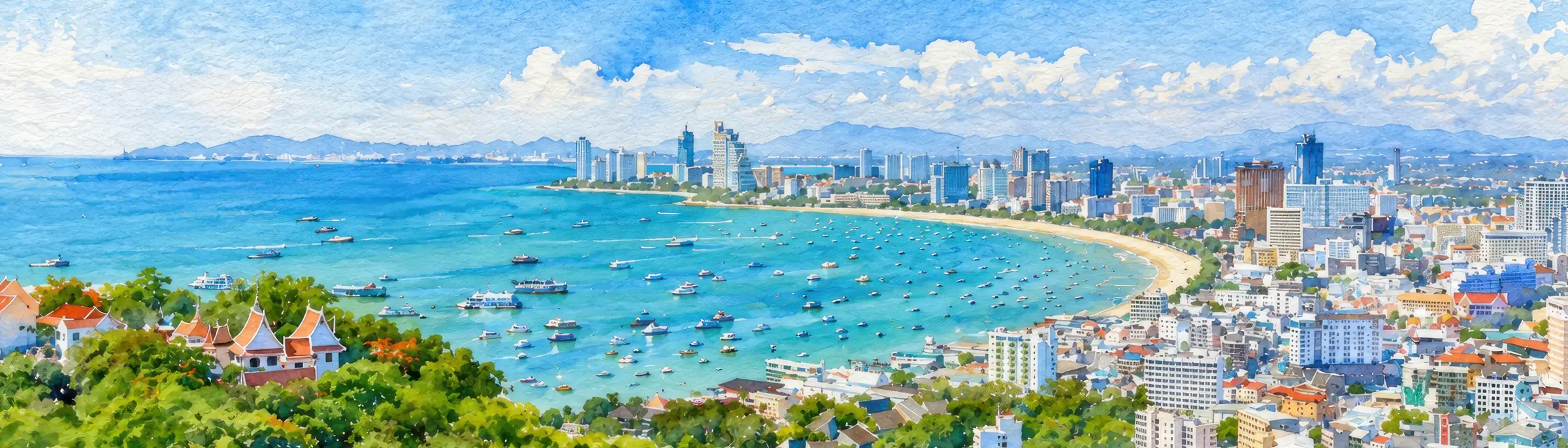
In Pattaya the problem is especially acute. The local property market is highly competitive, full of listings, and flooded with low-quality photographs from agencies. Most published listings were shot on an agent’s phone or by a generalist photographer with no grasp of the genre’s technical demands. Buyers scroll through hundreds of identical bad photos, which makes a good real estate photographer a competitive advantage for the property rather than a cosmetic expense.
What sets real estate photography apart
Geometry must be precise. Walls have to be vertical, the ceiling parallel to the floor, the windows undistorted. That is a technical requirement, and artistic choice doesn’t come into it. A buyer needs to see the proportions of the room, not an “artistic vision.” Shots with leaning verticals (often the result of a wide-angle lens and a tripod that isn’t level) give away unprofessional work immediately.
Controlled lighting. Natural light from a window produces either a blown-out background or a dark interior. A single built-in flash gives even, flat light with no depth. Professional real estate photography relies on HDR blending (several exposures merged into one image) or several flash units. A photographer who can’t do this ends up with windows that are white blobs or with a dark room, and one is as bad as the other.
Perspective and focal length. A standard lens (35–50 mm) makes rooms look cramped. A lens that is too wide (14 mm and wider) distorts proportions: furniture looks stretched, a doorway looks crooked. The sweet spot is 16–24 mm with perspective correction. Photographers who specialize in people don’t necessarily know this: their job is different, and so are their lenses.
Post-processing style. Real estate calls for a clean edit: neutral color, clear geometry, detail in the shadows. No “analog-film look,” no saturated colors, no heavy vignette. Any artistic treatment pulls attention away from what the buyer needs to see: the space.
What makes shooting in Pattaya especially difficult
Humid air. Window glass and mirrors in Pattaya are often coated with fine dust and droplets of moisture. In a photo this shows up as a soft haze or as spots. A professional photographer either wipes the mirrors before shooting (literally) or knows how to deal with it in post-processing.
Mixed light. A typical Pattaya condo has a warm ceiling lamp, cool white light in the bathroom, and sunlight coming through the window. The camera can’t cope with all of that in a single exposure: white balance is set either for the warm light or for the cool. The solution is a separate exposure for each zone, blended in post-processing. It can’t be done without preparation.
Tight layouts. Many condos in Pattaya are small studios or one-bedroom units of 28–45 square meters. Shooting a space like that without stretching it takes technique: a wide-angle lens with distortion correction, a precise camera position, sometimes a panorama stitched from several shots.
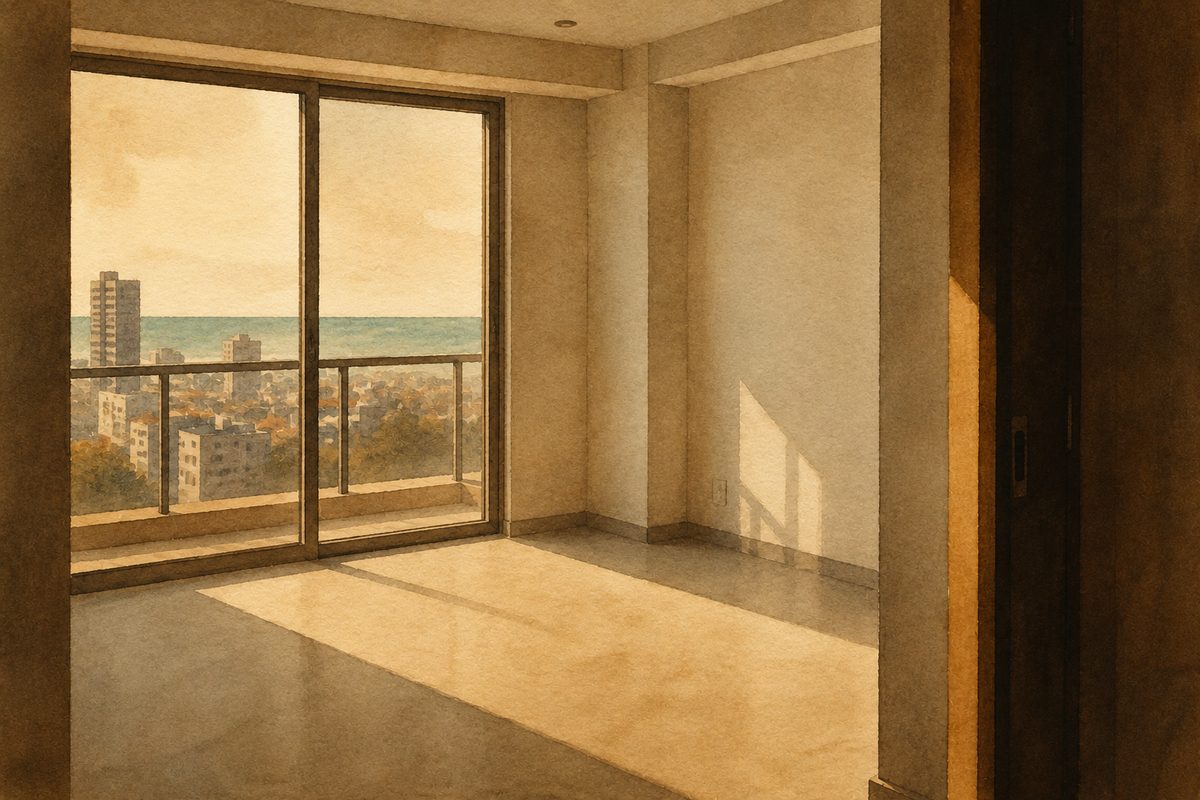
The view from the window. Whether it’s sea, city, or pool, the view is part of what is being sold. The window has to be visible and not blown out. That means exposure bracketing; otherwise either the view is white or the room is dark.
Balconies and terraces. Open spaces where shade gives way to direct sun are the hardest to shoot. Without flash or an ND filter, the background blows out.
What to look for in a portfolio
Full sets from a single property. A strong real estate photographer shows not one shot of a property but the full set: living room, bedroom, bathroom, kitchen, balcony, the view from the window. If the portfolio has only “best shots” from different properties and no complete sets, you can’t tell how the photographer handles a whole property.
Difficult spaces. Small rooms, bathrooms, badly lit kitchens. If the portfolio has only large living rooms with panoramic views, the photographer is shooting only what’s easy. A real apartment with a small kitchen will show how good they really are.
Verticals and geometry. Open ten photos in a row. Are all the walls vertical? Are the floors level? If even two or three of them have leaning lines, the photographer is not in control of perspective — and that is a basic requirement of the genre.
Room and view visible at the same time. This is a technical test. If the photos show either a bright room with a white window or a dark room with the view visible, the photographer has no HDR technique. If both look right, the photographer is bracketing exposures.
A clean frame. Can you see the photographer reflected in a mirror anywhere? Are there dangling cables, light switches, furniture jutting into the shot? Good preparation is a skill of its own. Many professionals go over the preparation in advance (clear away personal items, open the curtains) and arrive an hour before the shoot.
What to discuss before the shoot
Type of property. Apartment, house, commercial space, hotel, restaurant: each calls for a different technique. An experienced photographer will ask right away.
Number of final photos. Usually 15–30 for an apartment, 30–50 for a house, 50–100 for a hotel. If the photographer proposes to “shoot first and pick later” without naming a number, that is a lazy approach. A professional knows the structure of the set in advance.
Preparing the property. Whether to clear away personal items, open the curtains, wipe the mirrors, switch on all the lights. This is part of the process. If the photographer doesn’t mention preparation, they are following a simplified routine, and the final set will be worse.
Style. A clean “listing” style (neutral, for the ad), “architectural” (with an analog-film look, for magazines), or “lifestyle” (with models in the shot, for marketing luxury properties). These are different jobs at different prices.
Delivery time. For an active listing, 24–48 hours. If the photographer quotes a week, speed is not their priority, and in this kind of work it often matters.
Usage. For one listing only, or for several platforms, print advertising, PR. This can affect the usage rights and the price.
Cost
In Pattaya the spread is wide: from 1,000 baht for a studio apartment shot by a beginner to 30,000+ for a complete villa shoot by a pro (interior and exterior, day and evening). A standard apartment falls in the middle of that range, and the price depends on the scope of the job and on experience: a photo studio that specializes in interiors charges more than a generalist who takes such jobs now and then. You pay more for HDR blending, professional post-processing, and fast delivery.
A price well below average means either a generalist without the technique the genre requires (the geometry is off, the windows blow out) or a beginner. Well above average is the premium tier, for expensive properties where the photos carry marketing value.
What a portfolio can’t show
The ability to work with the agent and the owner at the same time. Often both are at the shoot, each with their own requests. The photographer has to coordinate the two without losing momentum. You only see that on a real job.
Willingness to travel out of town. Villas in Bang Saray, Sattahip, or Na Jomtien mean extra time and logistics. Not every photographer is willing; some work only in central Pattaya.
Real estate photography in Pattaya is an underrated genre. Many owners and agents save money by hiring a generalist at half the price. The result is a listing with bad photos, slow sales, and a property that sells for less. A good listing photographer pays for themselves with a single successful deal.