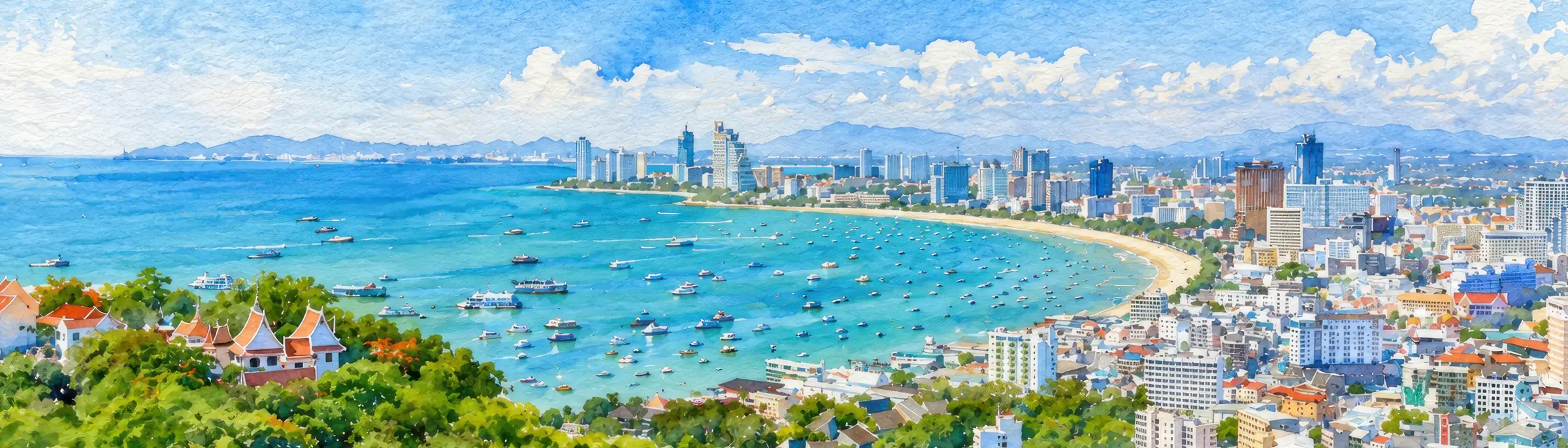
Pattaya in the evening, under its neon, is the most striking subject the city has. Walking Street, Beach Road, the Jomtien waterfront with its lit storefronts, the bars and restaurants with their warm lamps. In these conditions any camera, in anyone’s hands, produces shots full of saturated color and atmosphere.
That is a problem when you are trying to judge a photographer. A striking neon shot is a low bar. It is almost indistinguishable from a weak one, because color and contrast do the work for the photographer. To see which photographers really work with evening light and which are just standing in a beautiful setting, you have to look past the first impression.
What neon does to a photo
It shifts skin tone. Colored light sources (red, blue, or green neon, warm restaurant lamps) reflect off the skin and change its color. In a photo the face can turn yellow, reddish, or oddly greenish. Technically this can be corrected in post-processing with a separate white balance for the skin and for the background, but many photographers don’t do it. The result is skin that looks sickly or unnatural under neon.
It creates harsh contrast. Neon is usually bright, and everything around it is dark. The camera exposes either for the neon (the background goes black) or for the background (the neon blows out to white). A good photographer balances the two with flash or exposure; a bad one leaves the harsh contrast as it is.
It hides mistakes. A blurry face, a sloppy pose, a stray passerby in the background all show less when there are bright lights all around and an overall sense of atmosphere. The eye rests on the color and doesn’t take in the details.
It creates a false impression of technique. A shot against a neon background looks “cinematic” because of the light sources. That doesn’t mean the photographer was using any deliberate technique. Often they just pressed the shutter in the right place.
What a strong evening portfolio should show
Faces you can read. In neon shots the eyes should be visible, the expression clear, and the skin shouldn’t look sickly. If faces are always in shadow or distorted by color, the photographer is shooting the setting, not the people.
Controlled exposure. The neon shows, and the person is lit as well. That takes either flash from the front or a carefully chosen position relative to the available light.
Use of flash. Whether the flash is external or built-in, it leaves traces in the picture: a small catchlight in the eyes, a shadow behind the person on the wall or the ground, an evenly lit face against a dark background. If none of the evening shots in a portfolio use flash, the photographer works with available light only, and in Pattaya that is a serious limitation in the evening.
Different locations. Not just one “iconic” spot (only Walking Street, for example). A strong evening photographer works with different kinds of evening light: restaurants, balconies, the waterfront, quiet streets. That shows versatility.
Shots in low light. Not only in a dramatic neon setting but also in ordinary evening light: outside a restaurant with cozy lighting, on a street with regular streetlights, in a hotel garden with decorative lighting. These are the most honest shots — no neon to hide behind.
Action and movement. Motorbikes blurring past, the couple themselves blurred as they move. That takes shutter-speed control and technique. If every evening shot is static, the photographer hasn’t mastered the technique.
Red flags
Every shot in one color. If an evening portfolio is mostly red neon, or mostly blue, or mostly purple, the photographer keeps shooting the same location or the same aesthetic. A real city in the evening is a mix of colors.
Staged poses under neon. The couple stands perfectly placed under a bright sign, both looking the same way, smiling. That is a ten-second setup, at a moment when nobody is walking past. On a real wedding or couples shoot in Pattaya the street doesn’t empty out in the evening, so shots with an empty background on Walking Street were either edited (the passersby erased) or taken in a very narrow window. Either way it’s a workaround, not real work with the environment.
Overprocessing. Heavily lifted shadows, boosted contrast, oversaturated colors, cinema-style filters. It’s an aesthetic choice that looks dated within a few years. A good evening shot, properly edited, looks close to what the eye saw on the spot.
No dates or seasons in the portfolio. If all the evening shots look alike, they may be a couple of shoots presented as a portfolio. A strong photographer shows work from different periods and different seasons (warm air and cool air give different light).
Technical requirements for the photographer
A camera that handles high ISO cleanly. Full-frame cameras (the Sony A7 series, Canon R5/R6, Nikon Z6/Z7) shoot at ISO 3200–6400 without significant noise. Older or crop-sensor cameras give noisy pictures in the dark. This is a technical limitation, not a matter of the photographer’s preferences.
A fast lens. For evening shooting a 35mm f/1.4 or a 50mm f/1.4 is the best choice. Variable-aperture zooms at f/4–5.6 do worse in evening light: they need either a high ISO or a slow shutter speed, with the risk of motion blur.
An external flash with a diffuser. Direct built-in flash gives harsh, flat light that kills the evening atmosphere. An external flash, bounced or diffused, keeps the atmosphere and still lights the face. A photographer who relies on the built-in flash alone is working at the level of a quick vacation shoot.
Not every photographer in Pattaya lists their gear on their website; only a handful name specific camera and flash models. If the evening shots in a portfolio look technically demanding (balanced light, readable faces under neon, controlled movement), that is a strong signal even without a published gear list.
Where to shoot in the evening in Pattaya
Walking Street. The brightest and the most touristy: at the usual spots the photos all come out alike, because everyone shoots the same thing. But two spots really do work. One is the Walking Street entrance sign itself, a recognizable, iconic shot. The other is the far end of the street, on the pier side: there is more room there, and you can work the location with a standard lens or a moderate telephoto, so the passersby in the background blur out nicely and don’t distract. A photographer who suggests only “standing under the signs” in the middle doesn’t really know the city.
The Pattaya City sign on the hill. For neon without people there is the large illuminated lettering above the city. The lights stay on almost all night, but you have to shoot before closing time: Pattaya’s parks shut off access at around 10:00 p.m., and a security post right at the sign enforces it. Plan the shot in advance and don’t count on improvising after ten.
Beach Road. The waterfront between Walking Street and the center. There is less neon and more city light here, and the shots come with palms and the promenade. It makes a more “neutral” evening background.
Bali Hai Pier. Sunset and evening shots from the pier. Good for couples after their wedding, or for a proposal. It is less crowded than Walking Street, but in high season it gets packed too.
A hotel garden. Many hotels have gardens with decorative lighting. It’s a controlled environment, so the photographer can work with more care. It suits evening wedding portraits after the ceremony.
A balcony or terrace with a view. A private or rented space looking out over the city lights. The most controlled option for an intimate couples shoot.
The quiet streets of Naklua. The northern part of Pattaya: less touristy, with ordinary, softly lit city streets. It suits couples who want an evening atmosphere without the neon overload.
What portfolios don’t show
The photographer’s speed in shifting evening light. What makes evening shooting hard is that the conditions change quickly: the couple moves, passersby appear and disappear, the light sources change from one step to the next. It is a difficult technical job, and not everyone has the speed for it.
How the photographer behaves in loud, crowded places. On Walking Street and in the bars there is noise, music, and a crowd all around. The photographer has to stay calm, not distract the client, and not panic. That is a matter of character, not technique.
If your plans call for an evening shoot in Pattaya, choose your photographer on their evening work specifically, not on the overall portfolio. A strong daytime photographer can be weak in the evening. All-rounders are rarely equally strong in both.