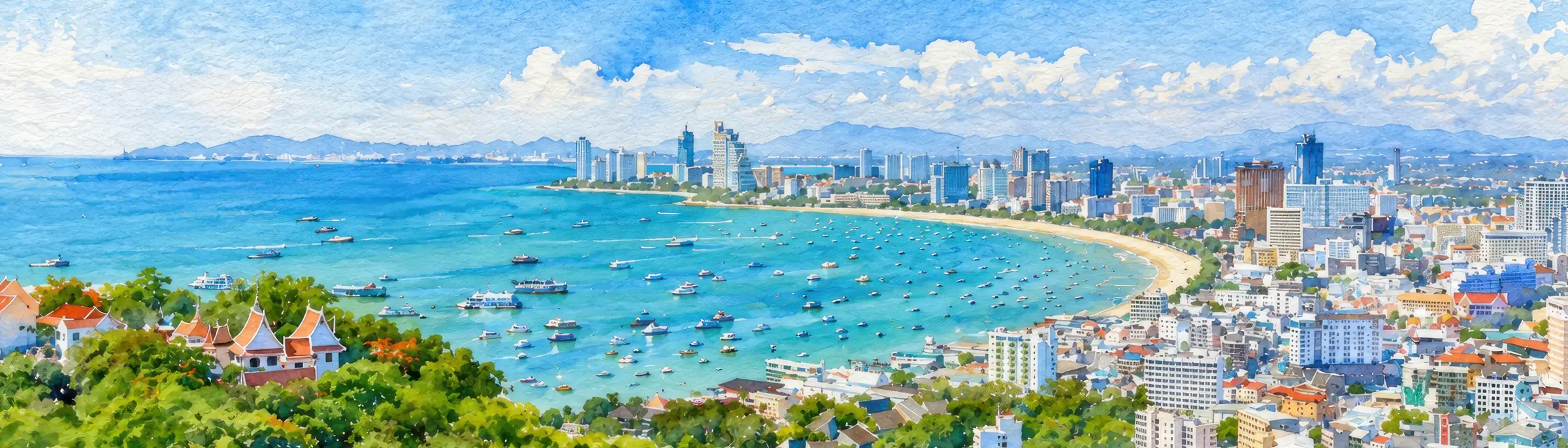
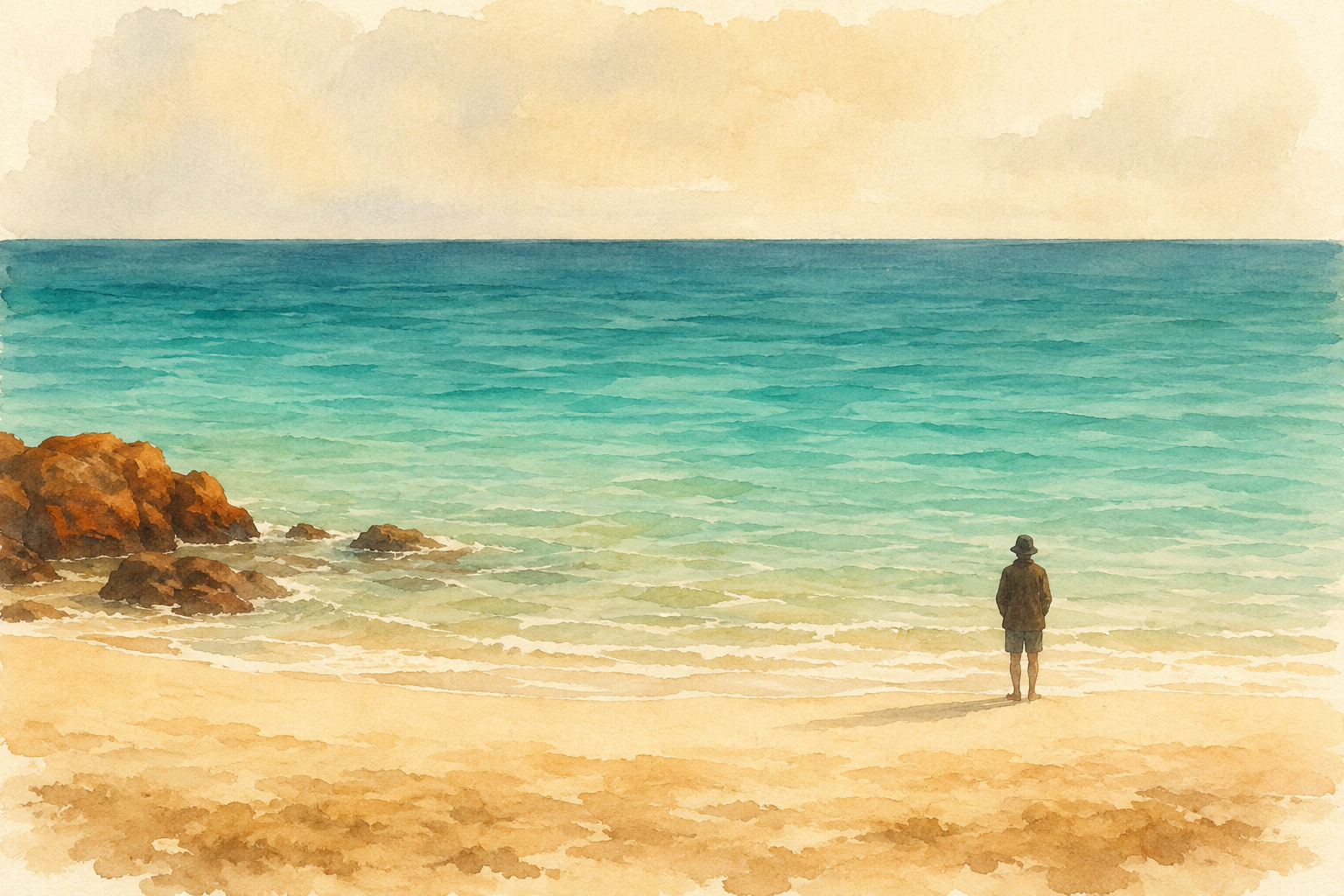
Koh Larn has turquoise water, rocks, and clean sand less than an hour from the Pattaya shore; on the mainland there’s almost none of that left. The location looks perfect, without a single hotel tower in the frame. But whether you get the shot comes down to three things that people think about last: how long the trip takes, what the tide is doing, and when the crowds pour in. The light and the beach itself come after that.
The main thing to understand before you go: “popping over for an hour of photos” doesn’t work here. Let’s take the island in order (the trip, the crossing, the tide, the beaches, the timing) and see along the way why sunset and a speedboat usually work against you on Koh Larn.
Logistics: a full day for an hour in front of the camera
Koh Larn is often thought of as a one-hour location, and that’s the main mistake. Let’s go through the trip to the first shot step by step:
- Getting to Bali Hai Pier: ~15 min
- Tickets and boarding: ~10 min
- Waiting for departure (counting both routes, a boat leaves roughly every 30 min): ~15 min
- The ferry crossing itself: ~45 min
- Getting off and walking to the songthaews (the local pickup-truck taxis): ~15 min
- Waiting for a songthaew to fill up, plus the ride: ~20 min
- Walking down the beach to the loungers and picking a spot: ~15 min
- Changing, setting up the gear, putting on sunscreen: ~15 min
That adds up to about 2.5 hours before the first shot. The shoot itself is an hour, plus 15–30 minutes for outfit changes and short walks between spots. The trip back takes just as long. In total, a “one-hour” shoot on Koh Larn is more than six hours door to door, effectively a full day.
Now add the ferry schedule. The first convenient ferry back leaves around noon, and from Tawaen, the tourist beach, not until ~1:00 p.m. (after that, roughly once an hour until 5:00 p.m.). You can’t leave before the middle of the day however much you’d like to, and the whole plan has to be built around that.
That’s where the price comes from. For a shoot on Koh Larn, photographers usually ask at least 1,000 baht more than their mainland rate, and they won’t agree to “just an hour”: the sensible minimum here is two hours. Behind that is a day lost to travel, not extra profit.
Getting there (and why not by speedboat)
On the mainland side, the boats leave from Bali Hai Pier in southern Pattaya. The ferry costs about 40 baht each way (the fare went up on April 10, 2026; some third-party sites still show the old “30 baht”), takes ~45 minutes, and arrives either at the Na Baan village pier or at Tawaen Beach. There are two routes, one to each of the island’s piers; each runs roughly once an hour, but they’re staggered by 30 minutes, so between them a boat leaves about every 30 minutes. Even so, don’t count on stepping straight onto a boat; build the wait into your plan.
A speedboat looks like the quick option, but more often than not it spoils the shoot before it starts. The ride is rough, the boat slams into the waves, and many people get seasick — children worst of all, and the smaller the boat, the worse it gets. Spray flies the whole way, so hair, makeup, and clothes suffer before you even step ashore. For a shoot it makes more sense to take the ferry: slower, but you arrive dry and in good shape.
High tide or low: the factor that matters most
The tide on Koh Larn is underestimated, though it often matters more than the light or the crowds.
High tide swallows the beach: the loungers end up almost at the water’s edge, there’s no flat strip of sand, and people have nowhere to spread out, so the whole shore looks occupied. Then the only places left to shoot are the ends of the beach and the less crowded corners.
Low tide uncovers a wide band of sand: you get a clean shoreline, and people have room to spread out.
On a shore that slopes this gently, even a small change in water level counts: every 30–50 cm of water is 3–5 meters of sand underfoot, so the second, smaller tide of the day, which often goes unnoticed, makes itself felt here. And it’s not only the height that matters but the direction. Over a two-hour shoot the water will either almost cover the beach or pull back and uncover a strip of sand. A good photographer plans the order of the shots around that movement, starting where it’s dry now and finishing at the very edge of the water as it retreats.
The tide has no fixed timetable: it’s a forecast, reliable about a month ahead, and you look it up in the same marine apps that sailors use (they usually have no separate station for Koh Larn, so people go by Pattaya). An experienced photographer checks the tide for your date on their own and picks the time and the beach to suit it. That’s part of their preparation, not something they find out from you on the spot.
Beaches, crowds, and good spots
The crowd arrives on schedule: the main wave lands at Tawaen and Na Baan by 9:00 a.m. and reaches the far beaches closer to 10:00, which is also when the charter boats turn up there. The peak is from 11:00 a.m. to 3:00 p.m., after which people start to leave. The early ferry at 7:00–8:00 a.m. gives you about two quiet hours on a far beach, and there won’t be another truly clear window all day.
- Tawaen: the main beach and the busiest, where the ferry comes in; no good for a clean shot during the day.
- Nual (“Monkey Beach”): in the south, with red rocks, turquoise water, and an open horizon; the one most often named as the best for a shoot.
- Tien: one of the most scenic and one of the quietest.
- Ta Yai: good in morning light.
- Sangwan: a quiet corner tucked away from the flow of visitors.
The most recognizable spot is the white wooden boardwalk over the rocks; it gets photographed more than anything else on the island.
Light and timing: what about sunset?
Early morning on the far beaches, before 9:00–10:00, is the best window: soft light and near-empty sand.
Sunset, though, is practically out of reach on a day trip to Koh Larn. By evening the regular ferry back is no longer running; the last boats leave around 5:00–6:00 p.m. After dark there are no scheduled boats at all, and that isn’t the operators being lazy: for a night crossing the Marine Department requires separate clearance, which means a suitably equipped vessel, a second crew member, and both crew members knowing maritime light signals. Only a handful of operators qualify, so you can’t stay for sunset and then just sail back. Shooting both sunset and sunrise is realistic only with an overnight stay, but the island has almost no comfortable accommodation or facilities, so that’s one for the adventurous, not a normal plan.
So it makes more sense to plan Koh Larn for the morning and shoot the sunset back on the mainland.
Getting around: skip the scooter
A scooter is the other obvious idea, but it isn’t worth renting. Koh Larn’s roads are steep climbs and descents where beginners regularly lose control; skidding and brake failure on the way down are the main documented danger, and you need to know how to ride on terrain like that. Add the island’s usual routine: a passport held as a deposit and inflated claims for “scratches” when you bring the scooter back. Between beaches, songthaews are more reliable and less stressful: 30–50 baht, though you do have to wait for them to fill up.
What to discuss with the photographer
Whether they know the island and its rhythm. Which beach suits the shots you want, when the crowds arrive, where that white boardwalk is. A local doesn’t hunt for spots on the go.
Whether they’ve worked out the time realistically. If they’re offering “an hour or so,” they don’t know Koh Larn. An honest plan here is half a day to a full day, tied to the first ferry back.
Whether they take the tide into account. At high tide, both the route and the beach are chosen differently. A photographer who checks the tide for your date on their own and plans around it really has worked on the island.
Koh Larn is the best natural backdrop near Pattaya and also the most demanding: half a day of travel, a ferry on a fixed schedule, the tide, and the crowds. The water and the rocks will give you a beautiful background on their own. Everything else rests on how well the photographer worked out the ferry, the tide, and the light in advance — and on whether they warned you to come for the day, not for an hour.